
Category: Uncategorized

  • DAVID GRIDLEY ON THE ART OF THE SITCOM

    DAVID GRIDLEY ON THE ART OF THE SITCOM

    Interview / Bri Ng Schwartz 

    Photographer / Dax Henry

    Styling / Bri Ilarda

    Grooming / Nicole Servin

    Actor David Gridley has kicked off 2026 with a bang, joining a powerhouse packed ensemble in the Scrubs reboot. The revamped series brings back original cast Zach Braff (J.D.), Donald Faison (Turk), Sarah Chalke (Elliot), John C. McGinley (Dr. Cox), and Judy Reyes (Carla) along with a new class of doctors featuring familiar faces Vanessa Bayer (Sibby) and Joel Kim Booster (Dr. Eric Park) with Gridley as Blake Lewis, a tough personality on the hospital floor. 

    With over a decade of being a working actor under his belt, Gridley has developed a keen sense for what goes into creating a character with layers in both TV and Film. We discuss his Scrubs journey, where his love for sitcoms originated as well as lessons learned being in the industry for over a decade. 

    Top, Brunello Cucinelli. Bottom, Alexander McQueen.

    What has it been like to step into such an iconic franchise?

    It has been a whirlwind. I think I’m just now processing how massive this is and what an impact it has and has had before. My head hasn’t stopped spinning since the booking.

    What can you share about your character, Blake Lewis? 

    He’s a very alpha male type. He’s not one to ask for help or really buddy up with the other interns because he thinks he can do it all himself and doesn’t have a lot of patience for incompetence. So he’s a bit of a tough personality to deal with.

    Could you share more about the place you go as an actor when playing a character like that?

    He does have reasons why he is cocky, arrogant, cold, and it’s all defense mechanisms. His  past traumas he’s been through as a sort of walls and barriers he’s put up to protect himself. I could pull a lot of those defense mechanisms from myself. 

    As far as the outer confidence, I mean, it’s fun to play, but I don’t operate like that. It’s been fun to discover that and be challenged by it.

    It’s such an ensemble-driven show. Not only with that original cast, but the new cast you’re coming up with. It’s an insane roster. Do you have any memorable moments from working alongside those folks? 

    The first time we all got together and we heard the lines read by them and just watching it all happen was a very iconic moment. Just seeing Zach, Donald and Sarah do their thing while you’re in the scene with them, it’s mind-blowing. 

    They’re so gracious and so inviting. We never felt like outsiders or felt like the new kids. They instantly invited us into the family, and that really made it easy for all of the newcomers to create with them.

    What do you think it is about this franchise that resonates with viewers enough to bring it back?

    A lot of the fans are hitting on it in the comments. They say it feels like a warm hug or like being embraced by someone familiar. I think especially now with all the hard stuff going on, the familiarity, something they know will make them laugh and feel something.

    It’s got the heart, it’s got the comedy, and the writers really made this love bomb for the viewers. You get so attached to it. The watchability is so great. You can just rip through episodes so fast. It feels like the characters are in your life; you’re really growing with them.

    What sitcoms did you grow up watching?

    Oh man, I grew up watching Family Matters. I also watched Fresh Prince, of course. What was the one before school? Saved by the Bell. Boy Meets World was massive.

    Fresh Prince, Boy Meets World, Saved By The Bell. They have all had reboots. There’s been talks of a Family Matters reboot on and off for years. There’s a real desire for nostalgic media right now. How do you feel about it from an actor’s perspective?

    With me, and I think a lot of viewers are like “Oh man, a reboot. They’re bringing it back. They’ll never be able to capture the original.”  But I think what’s been so cool about Scrubs is it hasn’t been this regurgitated version of it. It really is a revival picking up where these characters are now. It’s familiar, but it’s this new energy with the heart still attached.

    You’ve been in the industry for over a decade now. What are some of the biggest lessons you’ve learned as a working actor?

    The job can’t be your identity. The minute you start developing pride and an ego with acting, you’ll get humbled so quickly. I love it because it challenges you, it keeps you accountable, and it keeps you present. You’re always on your toes, which is also super stressful. Having kids adds another layer to it. I love the randomness of going to a different city or country for a job, but then you have kids and it’s harder to navigate. 

    I’ve learned to just be thankful and to be present with every job. A lot of actors will be on something and be like, “Oh, what’s the next thing? What’s the next thing?” And I think throughout the years I’ve really learned to really love the job you’re on and really enjoy it. That’s what’s been so great about Scrubs. It’s checked off every dream that I’ve won. Half hour, single cam comedy on a network and network gigs are hard now. So it’s a dream job. So now it’s hard too because you have these ebbs and flows. That’s something I’ve learned too, if you get these high octane dopamine rushes of working, being on set, doing these things straight to just unemployment. And you get depression every time I do at least a few weeks of depression after a gig, but just realizing everything’s seasonal and things come in seasons and it’s a brutal industry.

    I have months of interviewing somebody every day, and then months where I don’t even know if I can call myself a writer because I’m not working on anything.

    Totally. It’s brutal. What’s cool about it is, you’re always attuned to where you’re at. It challenges you to deal with those dark thoughts and find out who you really are, your grit and the perseverance you have. Are you a competitive person?

    I like to say no, but I think in certain environments I am. 

    You got to be. I feel like working in the industry, you have to have a competitive edge. 

    As I’m getting older, I remind myself that everybody’s path is super unique. Everybody’s just trying to do their own thing.

    That’s massive. What’s yours is yours. You hear that growing up and when you’re struggling, you feel like nothing is yours, but you can’t compete with others. You compete with yourself. 

    As an actor, do you struggle with the typecasting of it all? Walking into audition rooms and you see five other guys who look just like you? 

    Oh yeah. It is such a mental game. My wife has been pivotal. I don’t think I’d be acting still if it wasn’t for her. We’ve been together since high school, so she’s been on the whole journey as and has been a real advocate and cheerleader for me. You’ve got to have that support to do this. 

    On the topic of family, what would you say to your kid if they told you they wanted to be an actor?

    I’ve seen other families navigate this. It probably will come up because he seems very interested as a four-year-old. It’s really a balance of the parents and the kids. Can you do it in a healthy way? I guess we’ll have to cross the bridge when it comes, but I certainly wouldn’t want to squash the dream.

    What do you think makes a good sitcom?

    There’s so much. Pace, jokes within a scene, the music’s got to be right, editing has to be so good, and the characters have got to be iconic. It takes an entire village. 

    Top, Rag & Bone. Bottom, COS.

    Top, Helmut Lang. Sunglasses, Ray-Ban. Watch, Casio.

    You can catch David Gridley as Blake on Scrubs, now streaming on Hulu and Disney+

    CONNECT WITH DAVID GRIDLEY

    INSTAGRAM // IMBb

    The post DAVID GRIDLEY ON THE ART OF THE SITCOM appeared first on LADYGUNN.
  • Four Fun Things

    Four Fun Things

    tulips spring

    Guys, tomorrow is the first day of spring! We did it!!! Here are some tulips to celebrate.

    strangers by belle burden

    Have you read Strangers, the divorce memoir by Belle Burden?… Read more

    The post Four Fun Things appeared first on Cup of Jo.

  • Does Teriyaki Sauce Go Bad? Everything You Need To Know

    You grabbed that bottle of teriyaki sauce from the back of the fridge, and now you are not sure how long it has been open. Does teriyaki sauce go bad?

    The short answer: Yes, teriyaki sauce can go bad. The good news is that it is one of the more shelf-stable condiments in your kitchen. Thanks to its high salt and sugar content, it lasts a long time when stored properly and is unlikely to make you sick the way perishable foods would.

    For a full overview of how common condiments and sauces compare on shelf life, visit our Complete Food Storage Guide.

    Key Takeaways

    • Teriyaki sauce does go bad, but it has a long shelf life of 1 to 3 years unopened and up to 1 year opened when refrigerated.
    • Refrigerate after opening for best quality. Major brands including Kikkoman recommend it.
    • Spoilage signs to watch for: off smell, mold, significant color change, or strange texture.
    • Best by dates are quality indicators, not safety cutoffs. A properly stored bottle may still be good past the printed date.
    • Homemade teriyaki sauce has a much shorter shelf life of 5 to 7 days in the fridge.

    How Long Does Teriyaki Sauce Last?

    Teriyaki sauce is built from naturally preserving ingredients. Soy sauce provides a high-sodium base, sugar acts as a preservative, and vinegar or mirin add acidity that inhibits bacterial growth. Together these components give teriyaki sauce an impressive shelf life compared to most condiments.

    Type Pantry (Unopened) Refrigerator (Opened) Pantry (Opened)
    Commercial Teriyaki Sauce 1 to 3 years Up to 1 year 1 to 3 months
    Homemade Teriyaki Sauce N/A 5 to 7 days Not recommended

    Source: USDA FoodKeeper. Shelf life reflects best quality. Always check for spoilage signs before using.

    According to Kikkoman’s official product FAQ, their teriyaki marinades and sauces should generally be used within 18 months of the production date for unopened plastic bottles. Once opened, they recommend refrigeration and note that their sauces are best used within one month of opening for the freshest flavor, though quality holds well beyond that with consistent refrigeration.

    What Makes Teriyaki Sauce Shelf-Stable?

    Understanding why teriyaki sauce lasts so long helps you store it better. The main ingredients work together as natural preservatives:

    Soy sauce is the backbone of most teriyaki sauces. Its high sodium content creates an environment where most bacteria cannot survive. The USDA FoodKeeper confirms that soy-based condiments owe their shelf stability largely to this salt concentration.

    Sugar and mirin (sweet rice wine) also act as preservatives by binding water molecules and reducing the moisture available for microbial growth.

    Vinegar or rice wine lower the pH of the sauce, creating an acidic environment that further inhibits bacteria.

    Once opened, exposure to air, repeated contact with utensils, and temperature changes begin to degrade those preserving properties over time, which is why refrigeration after opening matters.

    Signs That Teriyaki Sauce Has Gone Bad

    When to Throw It Out

    Smell: Fresh teriyaki sauce smells sweet, savory, and slightly salty. If your sauce has developed a sour, fermented, or otherwise off odor, that is a clear sign it has turned. Trust your nose first.

    Mold: Visible mold or fuzzy growth anywhere in or around the bottle means discard immediately. This is most likely to occur if water or food particles have been introduced via a utensil.

    Color change: Teriyaki sauce is naturally dark brown. Significant darkening beyond its original color, or any unusual discoloration, can signal oxidation or spoilage.

    Texture change: A very thick, syrupy, or slimy consistency that differs from when you first opened the bottle is worth noting. Some thickening from evaporation is normal, but slimy texture is not.

    Taste: If the sauce passes the smell and appearance tests but still seems off, a small taste will confirm it. Rancid or unusually sour flavor means it is time to replace it.

    What is NOT a sign of spoilage: Slight separation of ingredients or sesame seeds settling at the bottom is completely normal. A gentle shake or stir will bring it back together with no quality loss.

    Does Teriyaki Sauce Need to Be Refrigerated After Opening?

    Technically, commercially made teriyaki sauce does not become unsafe if left unrefrigerated after opening, thanks to its preservative ingredients. However, refrigeration is strongly recommended by major brands. According to Kikkoman, refrigerating their sauces after opening helps maintain flavor quality for the longest possible time.

    Leaving an opened bottle at room temperature is acceptable if you plan to finish it within a few weeks. For anything beyond that, the refrigerator is the right choice. Flavor degradation, particularly the loss of the sauce’s signature sweetness and umami depth, accelerates quickly at room temperature once the bottle is open.

    Homemade vs. Store-Bought: A Big Difference

    Store-bought teriyaki sauce contains stabilizers, preservatives, and precise sodium levels that extend shelf life. Homemade versions contain none of these, which means a batch you make from scratch should be treated much more like fresh food.

    Refrigerate homemade teriyaki sauce immediately after it cools and use it within 5 to 7 days. If you want to make a larger batch, freezing is a better option than extended refrigeration. Frozen homemade teriyaki sauce keeps well for up to 3 months.

    How to Store Teriyaki Sauce Properly

    Storage Best Practices

    Before opening: Store in a cool, dry pantry away from direct sunlight and heat sources like the stove or oven. A consistent room temperature environment is ideal.

    After opening: Transfer to the refrigerator and keep the cap tightly sealed between uses.

    Keep the bottle clean. Wipe the rim and cap after each use. A crust of dried sauce building up around the lid introduces contamination risk over time.

    Use a clean utensil. Never dip a used spoon or brush directly into the bottle. Pour the amount you need into a separate bowl before using it for marinating or basting.

    Label it. If you tend to hold onto condiments for a long time, write the date you opened the bottle on the label with a marker. This takes the guesswork out of knowing how long it has been open.

    Can You Use Teriyaki Sauce Past Its Best By Date?

    Often yes, especially for an unopened bottle. “Best by” dates on teriyaki sauce are quality indicators set by the manufacturer, not safety expiration dates. The FDA does not require expiration dates on condiments, and a properly stored bottle showing no signs of spoilage is generally safe to use past the printed date.

    For opened bottles, the best by date becomes less meaningful because the clock starts when you first opened the bottle, not when it was manufactured. Focus on the spoilage signs above rather than the date on the label.

    Ready to Use Your Teriyaki Sauce? Try These Recipes

    If your teriyaki sauce passes the check and you are ready to put it to use, these Better Living recipes are a great place to start:

    Frequently Asked Questions

    Can old teriyaki sauce make you sick?

    In most cases, old teriyaki sauce that has been stored properly will not cause foodborne illness. Its high salt and sugar content make it inhospitable to most harmful bacteria. The more likely outcome of using very old teriyaki sauce is poor flavor rather than illness. That said, if there is mold present or the smell is clearly off, discard it.

    My teriyaki sauce has been in the pantry since I opened it. Is it still good?

    If it has been a few weeks, it is likely fine. If it has been several months, check carefully for any off smell, mold, or unusual texture before using. Next time, refrigerate after opening to get the full year of quality shelf life.

    Can you freeze teriyaki sauce?

    Yes, especially homemade versions. Pour into a freezer-safe container or ice cube tray for convenient portioned use, and freeze for up to 3 months. Store-bought teriyaki sauce rarely needs freezing given its long refrigerated shelf life, but freezing is a good option if you have made a large homemade batch.

    Does teriyaki sauce thicken as it ages?

    Some thickening can occur over time as water slowly evaporates from an opened bottle. This is not a sign of spoilage on its own. However, if the texture has become unusually syrupy, gel-like, or slimy beyond simple thickening, that warrants a closer smell and taste test before using.

    How is teriyaki sauce different from soy sauce in terms of shelf life?

    Plain soy sauce is more shelf-stable than teriyaki sauce because it contains fewer added ingredients. Teriyaki sauce adds sugar, mirin, and sometimes garlic or ginger, which lower the overall sodium ratio and introduce ingredients that degrade faster. Soy sauce can safely last 2 to 3 years opened at room temperature, while teriyaki sauce is better off refrigerated after opening.

    Further Reading

    Better Living may earn commissions through affiliate links and may occasionally feature sponsored or partner content. If you make a purchase through our links, we may receive a small commission at no cost to you.

    The post Does Teriyaki Sauce Go Bad? Everything You Need To Know appeared first on Better Living.

  • Does Teriyaki Sauce Need To Be Refrigerated?

    You just finished marinating chicken and now you are staring at the open bottle wondering: does teriyaki sauce need to be refrigerated?

    The short answer: Unopened teriyaki sauce does not need refrigeration. Once opened, refrigeration is strongly recommended by major brands and will significantly extend the quality of your sauce.

    For a full overview of how condiments and sauces should be stored, visit our Complete Food Storage Guide.

    Key Takeaways

    • Unopened: Store in a cool, dry pantry. No refrigeration needed.
    • Opened: Refrigerate for best quality. Major brands including Kikkoman recommend it.
    • Opened and refrigerated: Stays at best quality for up to 1 year.
    • Opened and left at room temperature: Quality declines significantly after 1 to 3 months.
    • Homemade teriyaki sauce must always be refrigerated and used within 5 to 7 days.

    Does Teriyaki Sauce Need to Be Refrigerated Before Opening?

    No. An unopened bottle of commercially made teriyaki sauce is shelf-stable and does not need to go in the refrigerator. Store it in a cool, dry pantry away from direct sunlight and heat sources. The high sodium content from the soy sauce base, combined with added sugar and acidic ingredients like vinegar or mirin, keeps it stable at room temperature for 1 to 3 years.

    The “best by” date printed on the bottle reflects peak flavor quality, not a safety deadline. A properly stored unopened bottle may remain perfectly good past that date.

    Does Teriyaki Sauce Need to Be Refrigerated After Opening?

    Yes, refrigeration after opening is the right move. While commercially made teriyaki sauce will not immediately become unsafe at room temperature after opening, its flavor and quality degrade much faster without refrigeration.

    Kikkoman, one of the most widely used teriyaki sauce brands, states on their official FAQ page that their teriyaki sauces and marinades should be refrigerated after opening, and recommends using them within one month of opening for the freshest flavor. Quality holds well beyond that with consistent refrigeration, with most commercial sauces staying at best quality for up to a year in the fridge.

    The reason refrigeration matters comes down to what happens once that seal is broken. Exposure to air, repeated contact from spoons and brushes, and fluctuating kitchen temperatures all begin to degrade the sauce’s preserving properties over time. Refrigeration slows all of these processes significantly.

    What Happens If You Leave Teriyaki Sauce Out After Opening?

    Room Temperature vs. Refrigerated

    An opened bottle left at room temperature in a cool, dry pantry may still be fine for a few weeks. Beyond that, the sweet notes fade, the umami depth flattens, and the overall flavor becomes noticeably one-dimensional. In warm or humid conditions, this process accelerates. The sauce is unlikely to make you sick in this scenario, but it will taste noticeably worse than a refrigerated bottle. If you go through a bottle quickly, room temperature is acceptable for short periods. For anything longer, the fridge is the right call.

    How Long Does Teriyaki Sauce Last in the Fridge?

    Opened and consistently refrigerated, commercial teriyaki sauce will stay at its best quality for up to one year. According to the USDA FoodKeeper, soy-based condiments refrigerated after opening retain quality for this timeframe, and teriyaki sauce falls into this category.

    Beyond one year of refrigerated storage, the sauce may still be safe to use but will have lost much of its flavor depth. Check for spoilage signs before using any bottle that has been open for a long time.

    Homemade Teriyaki Sauce: Different Rules Apply

    Homemade teriyaki sauce does not contain the stabilizers and precise sodium levels of commercial products. It must be refrigerated immediately after cooling and used within 5 to 7 days. Do not leave homemade teriyaki sauce at room temperature for more than 2 hours, in line with the FDA’s food safety guidelines for perishable prepared foods.

    If you make a large batch, freezing is a much better option than extended refrigeration. Frozen homemade teriyaki sauce keeps for up to 3 months. Pour it into an ice cube tray first for easy portioned use directly from the freezer.

    How to Store Teriyaki Sauce Properly

    Storage Best Practices

    Unopened: Cool, dry pantry or cabinet. Keep away from the stove, oven, and any direct sunlight. A consistent temperature is better than one that fluctuates with cooking heat.

    After opening: Refrigerate and keep the cap tightly sealed between every use.

    Keep the bottle clean. Wipe the rim and cap after each use to prevent dried sauce buildup, which can harbor bacteria and contaminate the bottle over time.

    Never double-dip. Pour the amount you need into a separate bowl before using it for marinating or basting. Dipping a used brush or spoon directly back into the bottle introduces bacteria and food particles that shorten shelf life.

    Label the opening date. Write the date you first opened the bottle on the label. A year goes faster than you think, and this removes all guesswork.

    Ready to Use It? Try These Recipes

    If your bottle passed the check and you are ready to cook, these Better Living recipes are perfect for putting teriyaki sauce to work:

    Frequently Asked Questions

    How can I tell if my refrigerated teriyaki sauce has gone bad?

    Give it a smell first. Fresh teriyaki sauce smells sweet and savory. An off, sour, or fermented odor that does not belong is your main warning sign. Also check for any visible mold, unusual texture changes, or significant color shifts. If everything looks and smells normal, a small taste will confirm it. See our companion post for the full spoilage checklist: Does Teriyaki Sauce Go Bad?

    Is it safe to use teriyaki sauce that was left out overnight?

    For commercial teriyaki sauce, yes. Its high sodium and sugar content means a single night at room temperature is very unlikely to cause spoilage or any food safety concern. Just return it to the refrigerator going forward. For homemade teriyaki sauce, the answer is less clear and the safer choice is to discard it if it was out for more than 2 hours.

    Does teriyaki marinade need to be refrigerated?

    Yes, always. Any time raw meat, poultry, or seafood has been in contact with teriyaki sauce, that marinade must be refrigerated and should not be reused unless it has been boiled first. The FDA recommends never reusing marinades that have touched raw protein without cooking them to a full boil first.

    Does teriyaki sauce go in the fridge door or on a shelf?

    Either works, but a shelf tends to have more consistent temperatures than the door, which fluctuates every time the fridge is opened. For a bottle you use frequently, the door is perfectly fine. For a bottle you use less often and want to keep longer, a middle or back shelf is a slightly better choice.

    Further Reading

    Better Living may earn commissions through affiliate links and may occasionally feature sponsored or partner content. If you make a purchase through our links, we may receive a small commission at no cost to you.

    The post Does Teriyaki Sauce Need To Be Refrigerated? appeared first on Better Living.

  • Does Coconut Oil Need to be Refrigerated?

    You have just opened a fresh jar of coconut oil and now you’re wondering: Does coconut oil need to be refrigerated?

    The short answer: No. Coconut oil does not need to be refrigerated before or after opening. It is one of the most shelf-stable cooking oils available and stores best at room temperature in a cool, dark pantry.

    Here is why, and what you should know to keep it fresh as long as possible.

    Key Takeaways

    • No refrigeration needed. Coconut oil is shelf-stable at room temperature before and after opening.
    • Best storage spot: a cool, dark pantry or cabinet away from your stove and direct sunlight.
    • Refrigeration won’t harm it, but it will make the oil very hard and difficult to scoop.
    • Solidifying is normal. Coconut oil melts above 76 degrees F and solidifies below it. This is not a sign of spoilage.
    • Shelf life at room temperature: up to 2 to 3 years for virgin coconut oil and 12 to 18 months for refined.

    Why Coconut Oil Does Not Need Refrigeration

    The reason coconut oil is so shelf-stable comes down to its fat composition. Coconut oil is made up of over 80% saturated fats, according to data from the USDA FoodData Central. Unlike olive oil, vegetable oil, or canola oil, which are primarily unsaturated fats that oxidize and go rancid relatively quickly, saturated fats are highly resistant to oxidation. Research published by the National Institutes of Health confirms that coconut oil’s saturated fat profile contributes directly to its oxidative stability compared to other cooking oils.

    This is the same principle that allows butter and lard, also high in saturated fat, to sit at room temperature for short periods without immediately spoiling, while flaxseed oil, which is highly unsaturated, needs refrigeration and should be used within weeks of opening.

    Coconut oil’s natural stability means a cool pantry does the job just fine. No refrigerator required.

    When Refrigeration Might Make Sense

    While coconut oil does not require refrigeration, there are a couple of situations where it can help:

    Hot climates: If your kitchen regularly exceeds 80 to 85 degrees F, the oil may stay in a semi-liquid state, which is not harmful but can make it messier to work with. Refrigeration keeps it firm and easy to scoop.

    Long-term storage of refined coconut oil: Refined coconut oil has a shorter shelf life of 12 to 18 months because processing removes many of the natural antioxidants that protect against rancidity. If you have a large supply you won’t finish quickly, refrigeration can help extend its quality.

    Bulk buying: If you have bought in large quantities and won’t open certain jars for a year or more, refrigeration or even freezing is a reasonable precaution.

    The One Downside of Refrigerating Coconut Oil

    Cold Coconut Oil Gets Very Hard

    Coconut oil solidifies below 76 degrees F, and in the refrigerator at around 38 to 40 degrees F it becomes very firm, similar to hard wax. If you refrigerate it, you will need to let it sit at room temperature for a while before use, or place the jar briefly in a bowl of warm water. For everyday cooking, most people find pantry storage far more practical.

    Best Way to Store Coconut Oil at Room Temperature

    Storage Best Practices

    Location: A pantry, kitchen cabinet, or cupboard away from the stove and any heat-generating appliances. Avoid storing it on the counter next to the oven or in a cabinet above the range.

    Temperature: Ideally between 60 and 75 degrees F. Consistency matters. Repeated temperature swings between warm and cool cause the oil to melt and re-solidify frequently, which can gradually affect texture, though not safety or flavor.

    Light: Keep it away from direct sunlight and bright kitchen lighting. UV exposure accelerates fat degradation. If your jar is clear glass or plastic, storing it inside a cabinet is preferable to an open shelf.

    Lid: Always keep the jar tightly sealed. Oxygen is the primary driver of rancidity. Wipe the rim clean before closing to ensure a proper seal.

    Utensils: Always use a clean, dry spoon or spatula. Never use a wet utensil or scoop with your fingers. Moisture introduced into the jar can lead to mold growth even in an otherwise stable oil.

    Does It Matter if Coconut Oil Melts and Re-Solidifies?

    No, and this is one of the most common coconut oil misconceptions. Coconut oil has a melting point of about 76 degrees F, so in many kitchens it cycles between solid and liquid depending on the season or time of day.

    This repeated phase-changing does not harm the oil, cause spoilage, or affect its nutritional value. The one cosmetic effect over time is a slightly grainy or streaky texture when the oil re-solidifies — but this is purely visual. The oil is still completely safe and good to use.

    How Long Does Coconut Oil Last at Room Temperature?

    Stored properly in a cool, dark pantry with the lid tight and a clean utensil used every time, coconut oil will last:

    • Virgin coconut oil (unopened or opened): 2 to 3 years
    • Refined coconut oil (unopened or opened): 12 to 18 months

    The “best by” date on the label is a useful reference for peak quality, but properly stored coconut oil frequently remains good well past that date. Always do a quick smell test before using — fresh virgin coconut oil smells mildly sweet and coconutty, while refined should smell neutral. Any sour, stale, or musty odor means it has gone rancid and should be replaced.

    For the full guide on spoilage signs, what rancidity means, and how to tell if your coconut oil has gone bad, see our companion post: Does Coconut Oil Go Bad?

    Frequently Asked Questions

    Can I store coconut oil in the bathroom for skin and hair use?

    Yes, bathrooms are a common and convenient spot for coconut oil used in beauty routines. Keep in mind that bathrooms tend to be warm and humid, which can slightly shorten shelf life compared to a cool pantry. Always use a clean, dry finger or spatula, never dip into the jar with wet hands, and replace it if it develops any off smell.

    My coconut oil has been in the pantry for two years. Is it still good?

    For virgin coconut oil, two years is well within the expected shelf life. Open the jar and check the smell — if it smells like fresh coconut and looks clean and white or clear, it is likely still good. For refined coconut oil, two years is at the outer edge, so check more carefully for any sour or stale odor. When in doubt, trust your nose.

    Should I refrigerate coconut oil in summer?

    Not necessarily. Unless your kitchen gets consistently very hot above 85 degrees F, room temperature storage is still fine in summer. If the oil has been in a fully liquid state for extended periods and you are concerned about quality, refrigerating it to firm it up is harmless. For most people in most climates, the pantry works year-round.

    Is there any food safety risk to leaving coconut oil unrefrigerated?

    No. The CDC and FDA food safety guidelines for oils focus on preventing rancidity through proper storage rather than refrigeration. Coconut oil does not support bacterial growth the way moisture-containing foods do. The risk is quality loss from rancidity, not foodborne illness.

    Further Reading

    The post Does Coconut Oil Need to be Refrigerated? appeared first on Better Living.

  • Does Coconut Oil Go Bad? Everything You Need To Know

    Coconut oil has become a kitchen staple for everything from sauteing vegetables to skin care. But that big jar you bought months ago has been sitting in the back of your pantry, and now you’re wondering: Does coconut oil go bad?

    The short answer: Yes, coconut oil can go bad. The good news is that it has one of the longest shelf lives of any cooking oil in your kitchen. With proper storage, virgin coconut oil can last up to three years, and sometimes longer.

    Here’s everything you need to know about coconut oil shelf life, how to spot spoilage, and the best way to store it.

    Key Takeaways

    • Coconut oil does go bad, but it has an impressively long shelf life of up to 2 to 3 years for virgin coconut oil when stored properly.
    • No refrigeration needed. Store it in a cool, dark pantry away from heat and light.
    • Rancidity is the main spoilage risk. Trust your nose. Rancid coconut oil smells sour, stale, or musty.
    • Solidifying is normal. Coconut oil turns solid below 76 degrees F and liquid above it. This is not a sign of spoilage.
    • Type matters. Virgin (unrefined) coconut oil lasts longer than refined coconut oil due to its natural antioxidants.

    How Long Does Coconut Oil Last?

    Coconut oil’s high saturated fat content, which is over 80%, is what makes it so shelf-stable. Saturated fats are far more resistant to oxidation than the unsaturated fats found in oils like olive or vegetable oil, according to research published by the National Institutes of Health.

    The type of coconut oil you have makes a meaningful difference in how long it lasts:

    Type Pantry (Unopened) Pantry (Opened) Refrigerator
    Virgin / Unrefined Coconut Oil 2 to 3 years 2 to 3 years 3 or more years
    Refined Coconut Oil 12 to 18 months 12 to 18 months Up to 2 years

    Note: These are quality guidelines based on proper storage. Always use your senses (smell, color, and taste) as your final check.

    Always check the “best by” date on the label as a starting point, but remember that date reflects peak quality, not safety. Coconut oil that is a few months past its best-by date may still be perfectly fine if it has been stored well and shows no signs of spoilage.

    Refined vs. Virgin Coconut Oil: Why the Shelf Life Differs

    Virgin (unrefined) coconut oil is cold-pressed from fresh coconut meat with minimal processing. This preserves its natural antioxidants, specifically phenolic compounds that actively slow the oxidation process. It has a mild coconut aroma and flavor and the longest shelf life of the two types.

    Refined coconut oil is pressed from dried coconut meat (copra) and goes through additional processing steps including bleaching and deodorizing. This strips out many of the natural antioxidants that protect against rancidity, shortening its shelf life to 12 to 18 months. The trade-off is a neutral flavor and higher smoke point, making it better suited to high-heat cooking.

    In short: if long-term storage matters to you, virgin coconut oil is the better choice.

    Signs That Coconut Oil Has Gone Bad

    When to Throw It Out

    The primary spoilage risk for coconut oil is rancidity, a chemical process where fats break down after prolonged exposure to oxygen, heat, or light. According to the FDA, proper storage is the key to preventing premature spoilage in shelf-stable oils.

    Smell: This is your most reliable test. Fresh virgin coconut oil smells mildly sweet and coconutty. Refined coconut oil should smell neutral. Rancid coconut oil smells sour, stale, musty, or unpleasant. If something seems off, trust your nose.

    Taste: Fresh coconut oil tastes mild and clean. Rancid oil tastes bitter or soapy. If the smell passed but taste seems off, discard it.

    Color: Pure coconut oil is bright white when solid and clear to pale yellow when melted. If it looks noticeably yellow or tan when solid, or murky and dark when liquid, that can indicate spoilage or contamination.

    Texture: Coconut oil should be smooth. A chunky, curdled, or inconsistent texture when at the same temperature as usual can signal it has turned.

    Mold: Rare, but possible if water has gotten into the jar from a wet spoon or hands. Visible mold means discard the entire jar immediately.

    What is NOT a sign of spoilage: Coconut oil solidifying, turning bright white, appearing streaky, or becoming grainy after temperature changes is completely normal. It melts and re-solidifies repeatedly with no quality loss.

    How to Store Coconut Oil Properly

    Storage Best Practices

    Keep it away from heat. The stove, oven, toaster, and sunny windowsills are all enemies of coconut oil. Heat accelerates oxidation. Store it in a cabinet or pantry that stays relatively cool, ideally below 75 degrees F.

    Keep it away from light. UV light degrades fats over time. If your coconut oil came in a clear jar, store it inside a closed cabinet rather than on an open counter shelf. Dark glass containers are ideal for long-term storage.

    Always use a clean, dry utensil. Introducing moisture or food particles into the jar is the fastest way to invite mold and speed up spoilage. Never use a wet spoon or your fingers to scoop.

    Keep the lid tight. Oxygen is the primary driver of rancidity. Seal the jar firmly after every use and wipe the rim clean before closing.

    Don’t pour used cooking oil back in. Oil that has been heated for cooking has already been exposed to high heat and may carry food particles. Keep your storage jar separate.

    Can You Use Coconut Oil Past Its Best By Date?

    Often, yes, especially for virgin coconut oil. “Best by” dates on coconut oil are manufacturer quality estimates, not safety cutoffs. The FDA does not require expiration dates on oils, and a properly stored jar that smells, looks, and tastes normal is generally still good to use.

    That said, the older oil gets, the more its flavor and nutritional properties decline. For cooking, coconut oil that passes the smell test is typically fine. For skin and hair use where you want full potency, fresher is better.

    Frequently Asked Questions

    Why did my coconut oil turn yellow?

    Some high-quality virgin coconut oils have a natural pale yellow tint from their antioxidants. However, if your oil was previously white and has turned noticeably yellow, tan, or discolored, this may signal early rancidity or contamination. The smell test is your most reliable confirmation. If it smells fine, it is likely still good.

    My coconut oil has streaks or an uneven texture. Is it bad?

    No, this is completely normal. Streaks, graininess, or an uneven marbled texture happen when coconut oil has gone through multiple melt-and-resolidify cycles at slightly different temperatures. It is a cosmetic issue only and has no effect on quality or safety.

    Can rancid coconut oil make you sick?

    Rancid oil is not acutely toxic in small amounts, but it is not good for you. Rancidity produces free radicals and harmful compounds that may contribute to oxidative stress in the body. Regularly consuming rancid oil is something to avoid. If your coconut oil smells or tastes off, replace it.

    How long does coconut oil last for skin and hair use?

    The same shelf life guidelines apply whether you use coconut oil in the kitchen or in your beauty routine. For topical use, be slightly stricter and apply the sniff test before each use. Degraded oil will not deliver the moisturizing and protective benefits you are looking for.

    Can you freeze coconut oil to extend its shelf life?

    Yes. Frozen coconut oil becomes very hard and will need time to thaw before use, but freezing is a good option if you have bought in bulk and won’t use it for an extended period. Store in a well-sealed, freezer-safe container and label it with the date.

    Further Reading

    The post Does Coconut Oil Go Bad? Everything You Need To Know appeared first on Better Living.

  • Primally Pure Review – what I love & what’s just okay

    Primally Pure Review – what I love & what’s just okay

    Use promo code TERILYN10 to save 10% on Primally Pure orders.

    I’m a skincare junkie and am always on the hunt for the best skincare that’s also safe. While my skincare routine consists primarily of Oliveda right now, I have used Primally Pure products off and on for almost a decade and have tried almost every product they have.

    This brand is one of my top recommended clean skincare brands, and it’s excellent if your skin is easily irritated or overwhelmed. I see Primally Pure as more about nourishment and calming the skin than correcting deeper wrinkles or fine lines. It’s great for supporting the skin barrier, especially during dry seasons, but I don’t rely on it alone for anti-aging results. I find Primally Pure best for sensitive skin, barrier support, and minimalist routines.

    So today, I’m sharing every product I’ve tried and my honest thoughts. Let’s go!

    Primally Pure Review (what I love & what I don’t)

    My top 3 products are the deodorant, sunscreen and baby balm so we’ll start with those. I’ve listed everything as yes, no, or maybe, depending on what I would focus on getting if I were you.

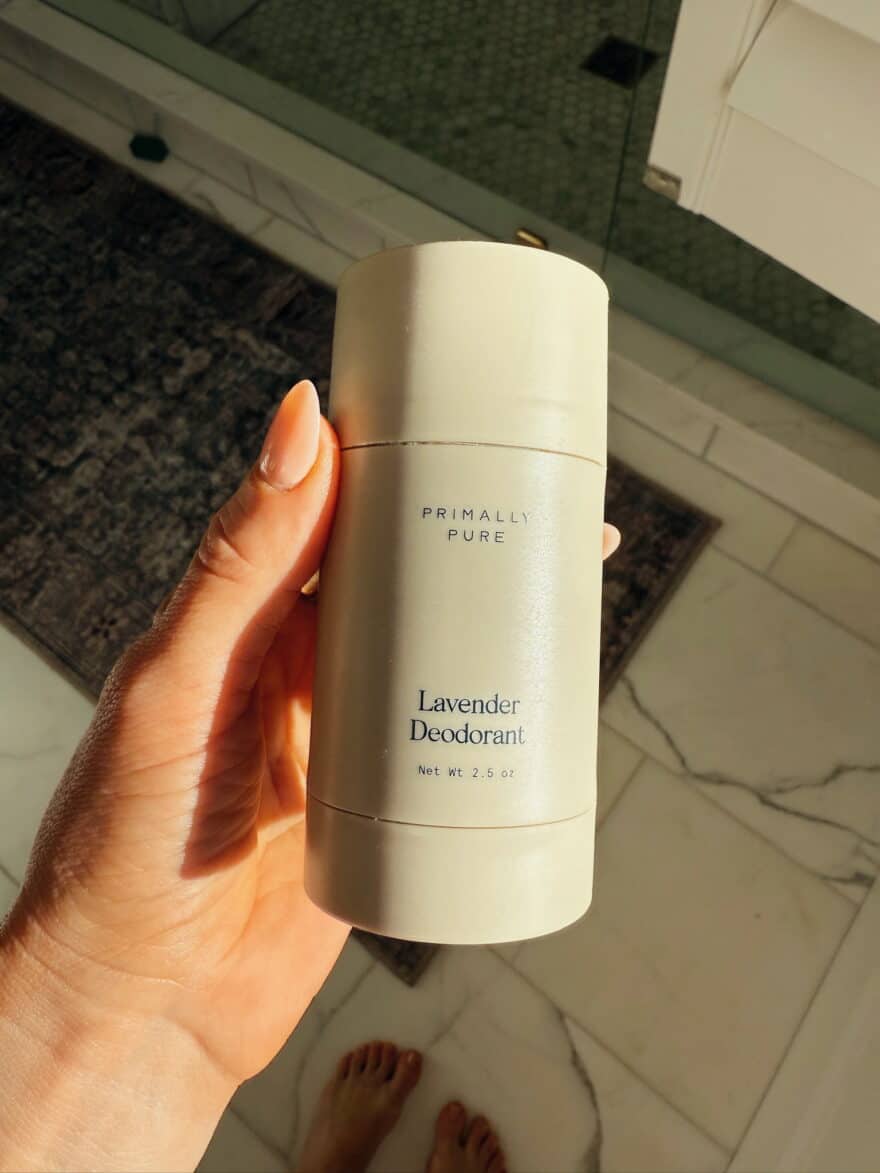
    Primally Pure Deodorant – MAYBE

    I love Primally Pure’s deodorant (so much so that I have a separate review on it linked here). I’m a big proponent of safe deodorant i.e. no aluminum, clean ingredients, etc. Primally Pure’s Deo works and smells really good, which is saying something, since I hate anything scented. It’s not an anti-perspirant, so I do still sweat when I use this, but I don’t smell.

    One note: many women have to switch natural deodorant brands every 9-12 months because our body chemistry changes, and some deodorants will stop working. I rotate among Primally Pure Deodorant, Agent Nateur Deodorant, and Necesairre Deodorant Gel.

    Primally Pure Suncream SPF – YES

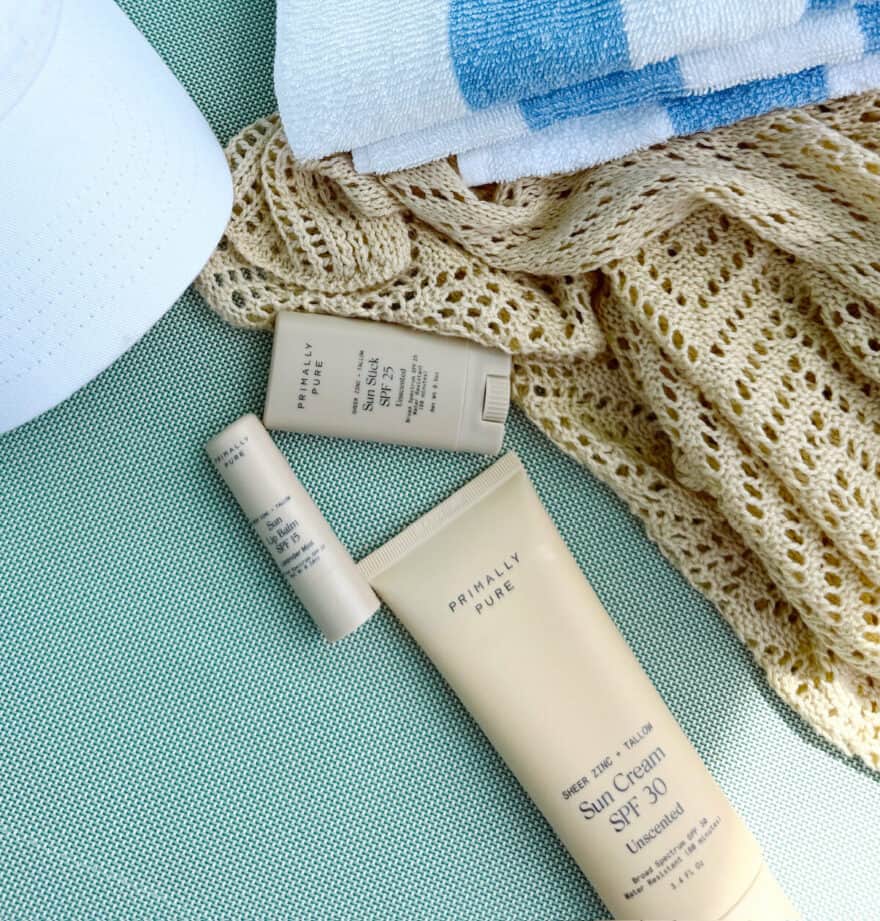
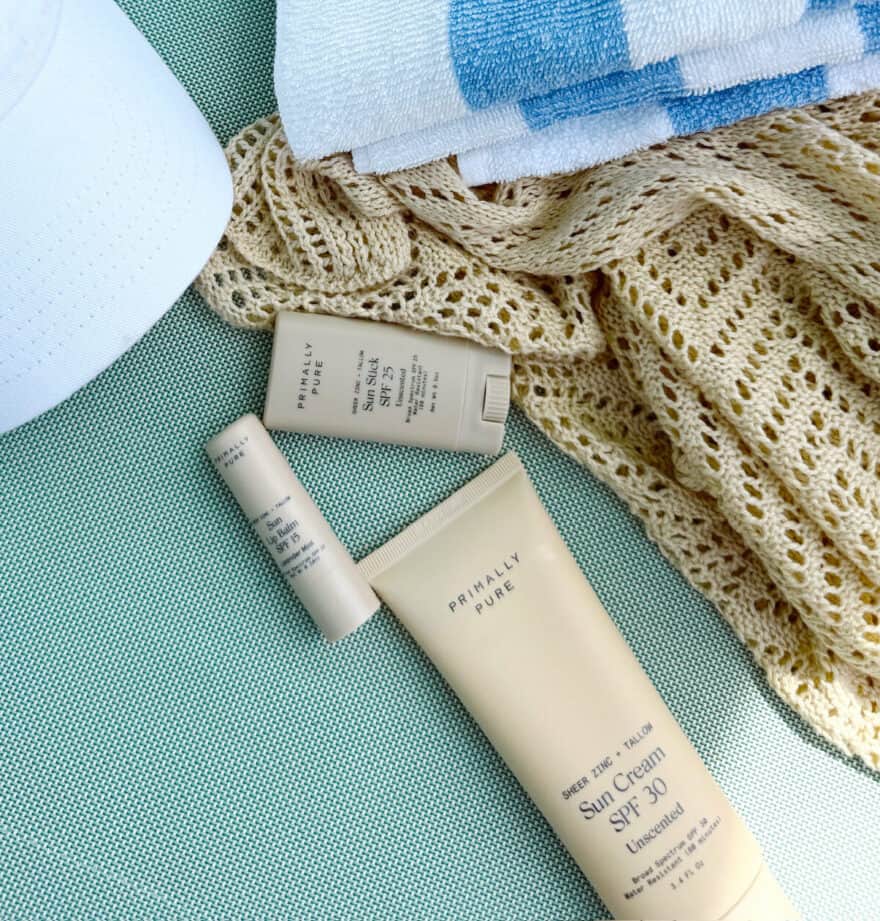
    The Suncream SPF 30 Lotion has become my go-to sunscreen. I’ve been using it nonstop since it arrived. It’s a mineral-based formula made with non-nano zinc oxide, and the ingredient list reads more like skincare than sunscreen: grass-fed tallow, mango butter, jojoba oil, and other nourishing essentials that actually support your skin barrier. The texture is rich but sinks in quickly, with no white cast and zero greasy residue. It leaves my skin feeling moisturized and protected, not sticky or heavy.

    I keep a tube in my pool bag at all times because it checks every box: it’s safe for the kiddos, gentle on sensitive skin, and doesn’t dry us out after a long day in the sun. It blends in easily without frantic rubbing or awkward streaks, and I feel good using it daily, knowing the ingredients are as clean and effective as they come (which is why it made my list of the best clean skincare brands). If you’ve been looking for a truly non-toxic SPF that feels like a treat to wear, this is it.

    I share the rest of my favorite non-toxic sunscreens in this post here.

    Primally Pure Sun Lip Balm SPF – MAYBE

    The Sun Lip Balm SPF 15 is a standout in clean beauty circles, and the best I’ve tried. It combines non-nano zinc oxide with nourishing ingredients like grass-fed tallow, mango butter, and beeswax. Just nine ingredients total, all nature-based. It moisturizes, protects, and soothes, without leaving a white cast. It’s gentle enough for daily wear, travel-friendly, and wallet-friendly (around $14).

    Primally Pure Baby Balm – YES

    The Primally Pure Baby Balm is the ONLY thing that works on my boys’ eczema-prone skin, and it’s gentle enough that I used it on Charles the day we brought him home. It’s also great to keep on hand for things like cracked nipples, stretch marks, etc. It’s made with lots of soothing herbs and healthy fats, and is a much better option than Aquaphore since Primally Pure is non-toxic.

    Primally Pure Body Butter – MAYBE

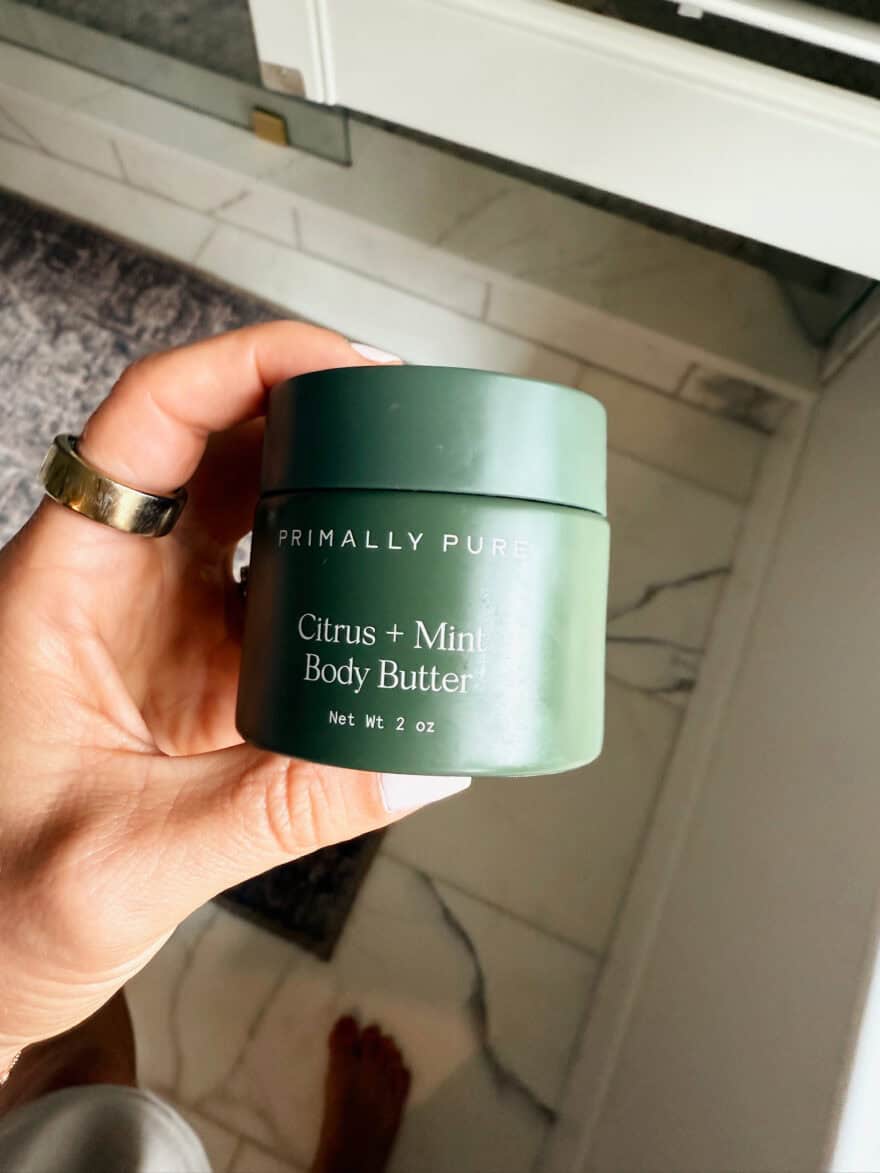
    I LOVE the Primally Pure Body Butter. In fact, it’s one of the only body butters I use when Thomas has really dry skin. It’s super thick and hydrating, and it’s smooth to apply (which is nice compared to some grainier ones I’ve tried). The larger 4 oz size lasts a few months for me, and I use a quarter-size amount every time (I use it at night since it’s a little greasy). You can buy it in a set of three to try all the scents, which is what I recommend. They’re all amazing, but my favorite is the lavender and eucalyptus.

    Read more about how to use body butter in this post.

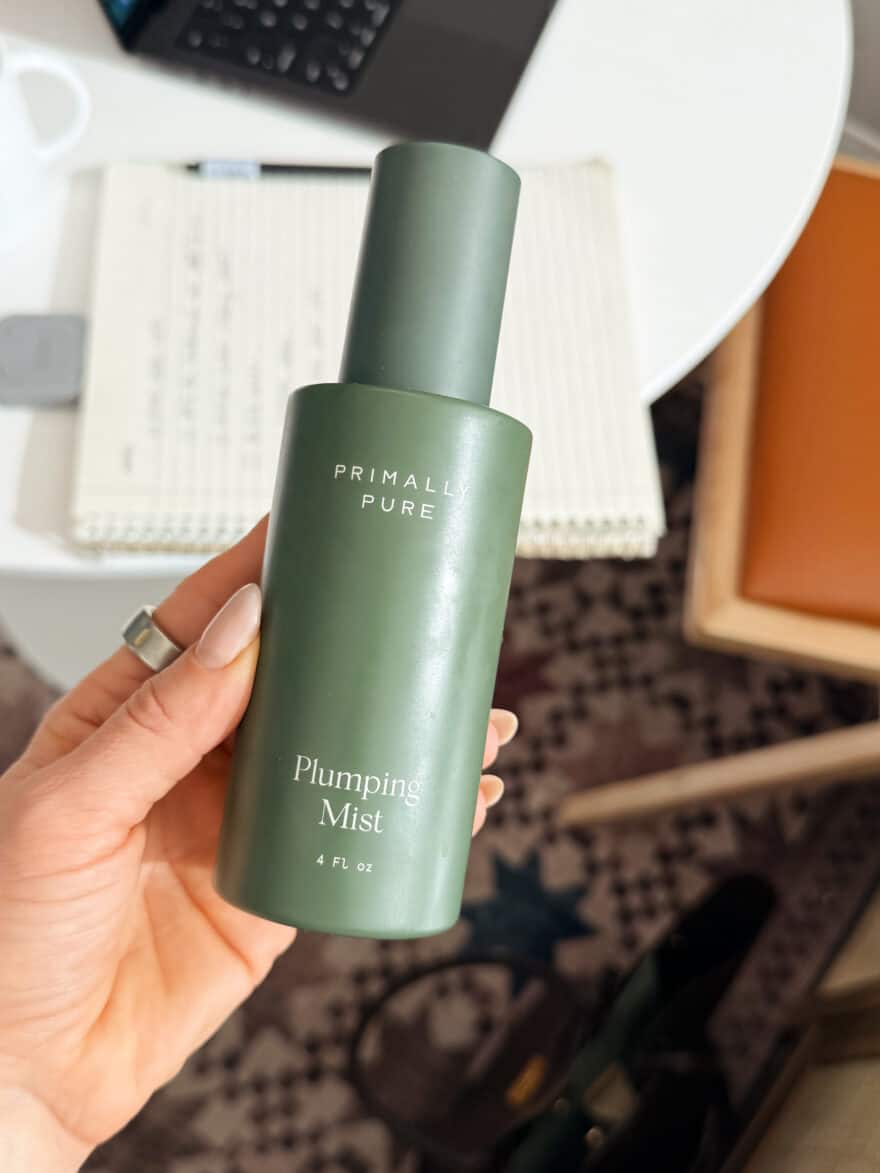
    Primally Pure Plumping Mist – YES

    Next, the Primally Pure Plumping Mist. I have incredibly dry skin. And this mist is one of my favorite mid-day hacks for hydration (I also like the face mist from Dime Beauty)! I find that most of the face mists I’ve used make me feel drier than before once the mist dries, but not this one. My skin feels rehydrated immediately after I use this and for the rest of the day. The smell is amazing too. I keep this on my office desk for a mid-day spritz! It contains aloe vera, peppermint, glycerin, rose, and witch hazel.

    You can use the Plumping Mist to set your makeup or after your cleansing step in your skincare routine, but I prefer it throughout the day since I already have a favorite toner for post-cleansing.

    Primally Pure Fancy Face Serum – NO

    The Fancy Face Serum is a newer product from Primally Pure. It’s great for all skin types and effective at diminishing fine lines, scarring, age spots, discolorations and more. It comes in two versions; one is not made for pregnancy, but they have a specific version of this Fancy Face Serum that was specifically formulated for pregnancy and breastfeeding that is made without neem oil, thyme essential oil, cypress essential oil, and carrot seed essential oil.

    Honestly, I think there are others that give better results, so I’d also check out the True Botanicals Pure Radiance Oil. Here’s my full True Botanicals Review.

    Primally Pure Dry Shampoo – MAYBE

    Primally Pure’s dry shampoo is SUPER popular for good reason. They have two versions: one for light locks and one for dark hair (I know brunette girls love to hear that!). This dry shampoo uses kaolin clay and organic arrowroot powder to absorb moisture while adding texture and volume, and it also contains organic essential oils of grapefruit (which has natural cleansing properties), lavender (soothes your scalp) and peppermint (stimulates hair growth).

    Unlike most dry shampoos you’ve probably used, you do not spray this into your hair, but rather shake it into your scalp, sort of like baby powder. Use a few shakes on your roots, and then blend it in with your fingertips. If you use it before bedtime rather than right before you’re going out, you’ll have even better absorption. This product CAN make a little bit of a mess, so use it before you get dressed for the day!

    From non-toxic to budget-friendly I’ve tried so many dry shampoos to find the best ones which you can read about in this post!

    Primally Pure Review – Body Oil – MAYBE

    I’ll be frank, I’m not a body oil person, so I’m not a good judge. BUT, if you like a long bath or massage, I’ve heard great things about the Primally Pure Body Oil. It makes a great gift because it’s so luxurious, has a pleasant smell, and hydrates your skin. The body oil contains a blend of aromatic, nourishing, and essential oils, so it leaves your skin super smooth and soft. However, it’s pretty thick and a bit greasy. I would say that this falls into the “just okay” category.

    Primally Pure Clarifying Serum – MAYBE

    This clarifying serum is my former content manager’s favorite product from Primally Pure. She struggles with combination and breakout-prone skin, and had never used a facial oil before this (the serum is in oil form). We’re all taught oil = acne, which isn’t necessarily the truth, and once she tried it, she was shocked by how well her skin responded. I don’t have acne-prone skin, so I haven’t tested it, but my she swears by it.

    The clarifying serum contains green tea with EGCG, marula oil and prickly pear seed oil are rich in vitamins C, E and K to treat active breakouts, acne scarring and sun damage. You don’t feel greasy after using it, but your skin does glow.

    I’ve found that the best way to apply facial oil to my skin is to add it to my night cream and blend the two, or to apply a dropper of oil to the back of my hands and then use the back of my hands to apply the oil to my face. This helps prevent the oil from absorbing right into my palms, PLUS the back of your hands will appreciate the hydration.

    Primally Pure Lip Balm – MAYBE

    The Primally Pure lip balm is great, but I typically want more in a lip balm (color, hydration, etc), however, my husband LOVES it. They use ingredients like tallow from grass-fed cows, coconut oil and organic cocoa butter. This combination helps hydrate and heal chapped lips. Since each lip balm is only $4, I’d make sure to add something else to your order so that you don’t spend more money on shipping than the gloss actually costs. That, or buy the set and get all 5 scents!

    Primally Pure Gua Sha – MAYBE

    If you’ve never used a Gua Sha or facial jade roller, you are missing out. Gua Sha is an ancient healing technique from TCM (traditional Chinese medicine). Using the Gua Sha stone, you lightly pull and lift your skin in massage motions to help promote lymphatic drainage and relieve muscle tension. I wish I was better about using my Gua Sha, since I know it requires time and practice to really appreciate the results. Even with just one use, though, you’ll notice de-puffing and the softening of fine lines and wrinkles.

    The Primally Pure jade roller also helps depuff your skin, but it requires less technique. I keep mine in my car and roll it on my tired face on the way to pilates or early morning appointments! Either would make a great gift for moms paired with one of their serums and a cozy robe. If you need a bathrobe recommendation, try the Cozy Robe from LAKE Pajamas.

    I shared the rest of my favorite at-home skincare tools in this post.

    Primally Pure Dry Brush – MAYBE

    I’m adding the Primally Pure Dry Brush to this list since it’s SUPER popular, but I have to admit that I’m not consistent about using mine!

    To use the Body Dry Brush, you’ll want to start at your feet and brush upwards in short, gentle strokes. Brush counterclockwise over your belly to help improve digestion, and then brush from your hands to your heart. You’ll always brush towards your heart. To finish, you’ll brush DOWN towards your armpits to flush out the toxins and promote lymphatic drainage.

    For the Facial Dry Brush, you’ll start at your neck, brushing in downward strokes to promote lymphatic drainage. Then, work all over your face, moving from the center of your face towards your hairline. The goal is NOT to scrub your skin, but get your blood and lymphatic fluid moving.

    You can order the brushes in a set, and it would be a great gift for a beauty or wellness guru!

    Primally Pure Room Spray – YES

    Room sprays are not something I ever thought I’d have feelings about. And then I tried the Primally Pure Room Spray, and now I use it all the time, especially before bed. What I love most is that it’s made with pure essential oils, so I’m not pumping synthetic fragrance into the air around my kids, which I appreciate.

    It smells clean and fresh without being overwhelming, and it actually lingers. I highly recommend it if you want a home that smells nice and are careful about what’s in the air.

    Who owns Primally Pure?

    Primally Pure was founded by Bethany McDaniel, who grew up in a family who started a beyond organic livestock farm in Southern California called Primal Pastures. Through that family business, she learned how amazing eating real food was for her health, and that inspired her to look into starting a beauty and skincare brand that focused on the same thing: real, whole ingredients.

    Their motto is “fewer is better”, meaning the fewer ingredients in a product, the better it is. All of their products are made with real ingredients that come directly from nature. And the most impressive part is that the products deliver legit results. I also love that they source many of their ingredients from family-owned farms.

    Primally Pure Customer Service

    I love Primally Pure’s team. They’re friendly, prompt, and helpful. They do a great job of making their customers and audience feel like family, even though the company is growing. I’ve always had great experiences with their customer service.

    Primally Pure Shipping

    You can get free shipping on every Primally Pure order over $75, which is what I always do. I wait until I need to replace 2-3 products, and order them at once to get free shipping. Since Primally Pure products are not cheap, getting to $75 isn’t too difficult.

    They have a great return policy too. They’ll process returns or exchanges within 60 days of your purchase for any reason, so you have plenty of time to try products out. If you have any issues, they’re happy to help make it right. Orders processed after 60 days, will be given store credit.

    You can use this form for any returns or exchange requests.

    Is Primally Pure Worth It?

    100% yes. I LOVE my Primally Pure products. While they don’t deliver the same results as some other clean beauty products I use, they are some of the BEST products I’ve tried when my skin is super dry and irritated and nothing soothes it. They are also pregnancy and nursing-safe, so if that is a concern, this is a GREAT brand.

    Primally Pure products are “cleaner” than Beautycounter and Oliveda, but I don’t feel like they are quite as effective as anti-aging. But if SUPER clean, natural products are the most important thing for you or you struggle to get dryness or oiliness under control, this brand is definitely worth trying.

    Use promo code TERILYN10 to save 10% on Primally Pure orders.

    Shop The Post


    Turn on your JavaScript to view content

    The post Primally Pure Review – what I love & what’s just okay appeared first on TeriLyn Adams.

  • Chaitra Navratri 2026

    Chaitra Navratri 2026

    Wishing all the Hindus a very happy Navaratri.

  • Easy Flank Steak Fajitas (Weeknight-Friendly)

    Easy Flank Steak Fajitas (Weeknight-Friendly)

    These Easy Flank Steak Fajitas are the dinner you make when flank steak is a good price at the store, or when you want a lean, easy steak recipe that doesn’t require much planning.

    Flank steak is one of the leanest cuts of red meat and cooks quickly over high heat, which makes it perfect for fajitas. Combined with sautéed peppers and onions and wrapped in warm tortillas, this is a simple, satisfying meal that feels satisfying without being heavy. I make it at least every other week!

    Instead of a traditional marinade, this recipe uses a reverse marinade, which is faster and less likely to burn. The flank steak is seasoned, seared, and then rested in a lime-garlic mixture to soak up all flavors and keep the lime juice bright (not burned). The fact that it’s faster is a huge win for weeknight dinners.

    Tip: If this is your first time cooking flank steak or you need a refresher, you may want to check out my Perfect Flank Steak Recipe over here.

    Why You’ll Love Flank Steak Fajitas

    • Fast and reliable: About 30 minutes of active cooking
    • Lean but flavorful: Flank steak stays tender when cooked and sliced correctly
    • No advance marinade: The reverse marinade saves time and avoids scorching
    • Balanced and filling: Protein, vegetables, and satisfying texture
    • Easy to adapt: Naturally dairy-free and simple to make gluten-free
    Flank Steak Fajitas

    Ingredients You’ll Need

    For the steak

    • 1½ pounds flank steak (anywhere from 1-2 pounds)
    • Kosher salt or fine grain sea salt
    • Freshly ground black pepper
    • Avocado oil or another high-heat oil, for searing

    Reverse marinade

    • 3 tablespoons fresh lime juice (from about 2 large limes), plus more for serving
    • 2 cloves garlic, grated or pressed
    • 2 tablespoons extra-virgin olive oil
    • 1 teaspoon ground cumin
    • ½ teaspoon sea salt
    • Freshly ground black pepper

    For the fajitas

    • 1 large yellow onion, sliced
    • 1 red bell pepper, sliced
    • 1 green bell pepper, sliced
    • 1 clove garlic, minced, pressed or grated

    For serving

    • Taco-size flour tortillas (or tortillas of choice)
    • Optional: avocado, sliced or mashed
    • Optional: chopped fresh cilantro
    flank steak fajitas

    How to Make Flank Steak Fajitas

    1. Season the flank steak & bring to room temp. Generously season both sides with kosher salt.
      • If you have time, let it sit at room temperature for 30–60 minutes. This helps the steak cook more evenly, but if you’re short on time, you can skip this step.
      • Cut the steak into sections before cooking: If your flank steak is long or uneven in thickness, cut it into 3–4 shorter pieces before searing. They cook more evenly and a bit faster, and you’re slicing the steak anyway before serving.
    2. Make the marinade and chop the veggies. While the steak comes to room temp, make the reverse marinade by combining the lime juice, grated garlic, olive oil, cumin, sea salt, and a few spins of black pepper in a small bowl. Set aside.
    3. Cook the steak. Pat the steak dry with paper towels and heat a large (12-inch if you have it) skillet over medium-high heat until hot, then add a generous glug of avocado oil. Sear the steak for 3–5 minutes per side, until nicely browned on the outside and still pink in the center. If it’s smoking alot and not cooked through, turn the pan to medium and cook until desired doneness (typically 135–140°F)
    4. Reverse marinate the hot steak. Transfer the steak immediately to a shallow bowl or dish, pour the marinade over the top, and tent loosely with foil. Let it rest for 10 minutes so the steak absorbs the marinade and finishes cooking gently. Now is a good time to warm the tortillas if needed.
    5. Cook the peppers and onions: While the steak rests, return the skillet to medium heat. Add another splash of oil if needed, then add the sliced onions and peppers. Cook until softened, about 7–8 minutes. A few minutes in, add a splash of water to deglaze the pan and pick up the browned bits. About 5 minutes into cooking the vegetables, add the garlic (carefully, to avoid burning), ¼ teaspoon of salt, and black pepper. Stir and cook just until fragrant 1-2 minutes, then turn off the heat. Adjust seasoning to taste.
    6. Plate: Warm the tortillas in the oven, microwave, or directly over a gas flame and keep them wrapped in a towel. Transfer the steak to a cutting board and slice the steak against the grain into thin strips or bite-sized pieces. Add it back to the pan with the peppers and onions (off the heat) to keep warm. Be sure to slice against the grain for the best texture.
    7. To Serve: Let’s everyone build their own, we like avocado on the bottom, then steak and veggies, then top with cilantro. Serve immediately.

    Variations & Substitutions

    • Skirt steak: Skirt steak is the more traditional cut of beef for fajitas and works just as well here. It’s slightly fattier than flank steak and very flavorful, but benefits from the same quick sear and slicing against the grain.
    • Choose your toppings: We like to keep it simple with avocado and cilantro, but you can add salsa, pico de gallo, guacamole, sour cream, cheese, spicy pepper, or hot sauce. Use your favorite taco toppings.
    • Different vegetables: We prefer traditional fajitas with peppers and onions, but feel free to swap in sliced poblano peppers, mushrooms, or even thinly sliced zucchini to use up what you have. Just aim for vegetables that cook quickly and soften without releasing too much water.
    • Gluten-free: Use corn tortillas or your favorite gluten-free tortillas to keep the meal completely gluten-free. Or, skip the tortillas and serve it over cooked white rice or cooked brown rice.
    • Switch up the reverse marinade: Add a few tablespoons of fresh orange juice, a teaspoon of chipotle in adobo, chili powder, spices or other flavor combos. Once you learn this method, you can play with the flavors and ratios to make it your own.
    • Citrus swap: Lime juice gives the best flavor, but lemon works if that’s what you have. If using lemon, add a small splash of water to mellow the acidity.
    • Extra heat: Add sliced jalapeño to the pan with the peppers and onions, or finish with a dash of hot sauce.
    • Hate cilantro? Leave it out! 🙂

    Chef Tips for the Best Steak Fajitas Recipe

    • Use a hot pan: Whether you’re using cast iron or stainless steel, let the pan heat fully before adding the steak. A hot pan is what gives you a good sear without overcooking the meat.
    • Choose the right oil: Use a high–smoke point oil like avocado oil, beef tallow, or grapeseed oil for searing. Save extra-virgin olive oil for the marinade only.
    • Don’t skip the rest: Resting the steak in the marinade allows it to finish cooking gently and absorb flavor. This step makes the steak noticeably juicier.
    • Slice against the grain: Flank steak has long muscle fibers. Cutting across them is essential for tenderness — it’s one of the most important steps in the recipe.
    • Deglaze for flavor: That small splash of water added to the pan while cooking the vegetables lifts the browned bits left from the steak, adding depth to the fajitas without extra ingredients.
    • Serve off the heat: Once the steak is sliced, keep it off the heat to prevent overcooking. Adding it back to the warm pan (with the heat off) keeps everything juicy and tender.

    Storage & Meal Prep

    • Store leftover steak and vegetables in an airtight container in the refrigerator for up to 3 days
    • Keep tortillas stored separately so they don’t dry out
    • Reheat gently in a skillet over medium heat

    Leftovers make an excellent lunch or quick dinner the next day.

    Want more healthy home cooking inspiration? Find more taco recipes here.

    Flank Steak Fajitas FAQs

    Why is flank steak good for fajitas?
    Flank steak is lean, flavorful, and cooks quickly over high heat. When sliced against the grain, it stays tender and works perfectly for fajitas.

    What is a reverse marinade?
    Instead of marinating before cooking, the steak rests in the marinade after searing. This prevents burning and keeps the flavor fresh and bright. Plus, you don’t have to think ahead to marinate the meat.

    Do I have to let the steak come to room temperature?
    It helps the steak cook more evenly, but if you’re short on time, the recipe still works well without it. In general, letting meat sit out for 30–60 minutes helps it cook more evenly because you’re not starting with a very cold center. Meat coming straight from the fridge (around 40°F) needs more time to heat through, which can lead to the outside browning before the inside is cooked to your liking. That said, if you’re short on time, you can absolutely skip this step—just keep the heat slightly lower if needed and cook until the steak reaches your desired doneness.

    The post Easy Flank Steak Fajitas (Weeknight-Friendly) appeared first on Elizabeth Rider – Modern Healthy Living.

  • Nicki Sebastian’s Foolproof Eyeliner Trick (Even for Marathons)

    Nicki Sebastian’s Foolproof Eyeliner Trick (Even for Marathons)

    Nicki Sebastian's Foolproof Eyeliner Trick

    Photographer Nicki Sebastian doesn’t wear a ton of makeup, except for her cat-eye liner, which she’s worn for 30 years, every day since eighth grade. “I’ve worn it through every occasion imaginable: marathons, snorkeling,” she says.… Read more

    The post Nicki Sebastian’s Foolproof Eyeliner Trick (Even for Marathons) appeared first on Cup of Jo.